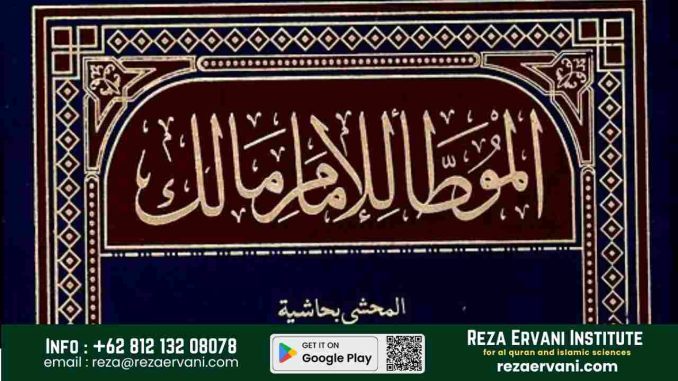
موطأ مالك
Muwaththa’ Maalik
Translated by: Reza Ervani bin Asmanu
This article “Muwaththa’ Maalik” is included in the Science of Hadith Category
أول كتاب حديث وصل إلينا كاملاً ومرتبًا على أبواب العلم هو موطأ الإمام مالك رحمه الله ، وقد وضع الله له القبول في نفوس الناس ، والموطأ من أجل الكتب التي ألفت في عصر الإمام مالك وأعمها نفعًا ، وقد فضله الشافعي على كل ما صُنِّف في الحديث إلى وقته ، حيث قال : ما على أديم الأرض بعد كتاب الله أصح من موطأ مالك .
The first hadith book to reach us in its complete form and organized according to the chapters of knowledge is the Muwaththa’ of al-Imaam Maalik rahimahullaah. Allah has granted it acceptance in the hearts of people. The Muwaththa’ is among the most magnificent books written during the era of al-Imaam Maalik and the most broadly beneficial. Imam asy-Syaafi’iy prioritized it above all works classified in the field of hadith during his time, stating: “There is nothing on the surface of the earth, after the Book of Allah, more authentic than the Muwaththa’ of Maalik.”
ولعل الإمام مالك هو أسبق علماء الحديث في وضع ما عرف بفن الحديث ، فإنه لا يكاد يعرف من سبقه في نقد الرواة والتشدد في الأخذ عن الرواة والعلماء ، وقد جمع الإمام مالك في موطئه ما صح عنده من حديث وتفسير وتاريخ ، وذكر أقوال الصحابة والتابعين والأئمة قبله.
Perhaps al-Imaam Maalik was the earliest hadith scholar to establish what is known as the art of hadith (hadith sciences). Hardly anyone is known before him to have practiced the criticism of narrators (naqdur ruwaat) and maintained such strictness in receiving reports from narrators and scholars. al-Imaam Maalik collected within his Muwaththa’ what he deemed authentic, including hadith, tafsir, and history, while also mentioning the statements of the Companions, Successors (Tabi’in), and the imams before him.
درجة الموطأ بين كتب الحديث :
The Rank of the Muwaththa’ among Hadith Books:
تأتي مرتبة الموطأ بعد الصحيحين – صحيح البخاري وصحيح مسلم – في الصحة في رأي جمهور المحدِّثين .
The position of the Muwaththa’ ranks immediately after the ash-Shahiihain—Sahih al-Bukhari and Sahih Muslim—in terms of authenticity, according to the opinion of the majority of hadith scholars (muhadditsiin).
من هوالإمام مالك :
Who is al-Imaam Maalik:
هو أبو عبد الله مالك بن أنس بن مالك الأصبحي، إمام دار الهجرة وأجل علمائها ، ولد بالمدينة المنورة عام (93 هـ)، وتوفي بها (179هـ) ، وكان أبوه رضي الله عنه راوية للحديث .
He is Abu ‘Abdullaah Maalik bin Anas bin Maalik al-Ashbahiy, the Imaam Daarul Hijrah and its most magnificent scholar. He was born in Madinah al-Munawwarah in the year 93 AH and passed away there in 179 AH. His father, radhiyallaahu ‘anhu, was also a narrator of hadith.
تلقى الإمام مالك العلم من كبار العلماء والفقهاء من التابعين ، وسمع كثيرًا من الزهري، حتى إنه يعتبر من أشهر تلاميذه ، كما سمع من نافع مولى ابن عمر ، واشتهر بالرواية عنه حتى أصبحت روايته عنه تسمى بالسلسلة الذهبية ، وهي مالك عن نافع عن ابن عمر ، وما زال دائبـًا على العلم وتحصيله حتى أصبحت له الإمامة في الحجاز ، وأطلق عليه عالم المدينة، وإمام دار الهجرة، وانتشر صيته في الآفاق ، فهرع إليه أهل العلم من مختلف بقاع الأرض، وكان يعقد مجلسـًا للحديث في مسجد النبي صلى الله عليه وسلم في وقار وأدب وحشمة ، لا يرفع صوته فيه إجلالاً للرسول صلى الله عليه وسلم .
al-Imaam Maalik received knowledge from the senior scholars and jurists (fuqahaa) among the Successors. He heard extensively from az-Zuhriy, to the extent that he is considered one of his most famous students. He also heard from Nafi’, the freed slave of Ibn ‘Umar, and became so renowned for narrating from him that his chain became known as as-Silsilah adz-Dzahabiyyah (The Golden Chain): Maalik from Nafi’ from Ibn ‘Umar. He remained diligent in seeking knowledge until he achieved leadership (imamah) in the Hejaz, and was dubbed the Scholar of Madinah and the Imaam Daarul Hijrah. His reputation spread across the horizons, causing scholars from all corners of the earth to flock to him. He used to hold hadith assemblies in the Prophet’s Mosque shallallaahu ‘alaihi wa sallam with great dignity, etiquette, and modesty, never raising his voice out of reverence for the Messenger of Allah shallallaahu ‘alaihi wa sallam.
سبب تأليف الموطأ :
The Reason for Writing the Muwaththa’:
يروى في سبب تأليف الموطأ أن المنصور لما حج اجتمع بالإمام مالك وسمع منه الحديث والفقه وأعجب به ، فطلب منه أن يدون في كتاب ما ثبت عنده صحيحـًا عن رسول الله صلى الله عليه وسلم من مسائل العلم ، وطلب أن يوطئه للناس ، أي يجعله سهل التناول ، فاستجاب الإمام مالك لطلب المنصور ، وصنف كتابه العظيم الموطأ .
It is narrated concerning the reason for writing the Muwaththa’ that when al-Mansur performed the Hajj, he met with al-Imaam Maalik, listened to his hadith and jurisprudence, and was deeply impressed. He requested that the Imam document into a book what had been established as authentic from the Messenger of Allah shallallaahu ‘alaihi wa sallam regarding matters of knowledge. He also asked him to yuwaththi-uhu for the people—meaning to make it easily accessible. al-Imaam Maalik complied with al-Mansur’s request and composed his great book, the Muwaththa’.
عناية الإمام مالك بالموطأ :
al-Imaam Maalik’s Care for the Muwaththa’:
عني الإمام مالك بالموطأ عناية فائقة حتى قالوا : إنه مكث فيه أربعين سنة ينقحه ويهذبه ، وقد أخذه عنه الأوزاعي في أربعين يومـًا ، فقال مالك : كتاب ألفته في أربعين سنة أخذتموه في أربعين يومـًا ، ما أقل ما تفقهون فيه .
al-Imaam Maalik gave extraordinary attention to the Muwaththa’, so much so that it is said he spent forty years refining and perfecting it. When al-Awzaa’iy once studied and narrated it from him in just forty days, Maalik remarked: “A book that I composed over forty years, you have taken in forty days; how little is your understanding of it.”
قال مالك : عرضت كتابي هذا على سبعين فقيهـًا من فقهاء المدينة ، فكلهم واطأني عليه فسميته الموطأ ، فقيل لهذا سمي الموطأ ، وقيل إنه سُمي الموطأ ، لأن المنصور قال له : وطئه للناس أي اجعله سهل التناول ، والموطأ أي الممهد المنقح .
Maalik said: “I presented this book of mine to seventy jurists (fuqahaa) of Madinah, and they all agreed with me (waatha-aniy) upon it, so I named it the Muwaththa’.” Thus, it is said that it was named Muwaththa’ for this reason. It is also said it was named as such because al-Mansur told him: “Ease it (waththi-uhu) for the people,” meaning make it easily accessible. And Muwaththa’ signifies that which is smoothed out and refined.
وقد روى الموطأ عن مالك بغير واسطة أكثر من ألف رجل ، وضرب الناس فيه أكباد الإبل من أقاصي البلاد ، منهم الأئمة المبرزون ، ومنهم الفقهاء المجتهدون ، ومنهم الملوك والأمراء كالرشيد وابنيه .
The Muwaththa’ was narrated directly from Maalik by more than a thousand men, and people traveled great distances for it from the furthest lands. Among them were prominent imams, mujtahid jurists, as well as kings and princes like ar-Rashid and his two sons.
احترام الإمام مالك للخلاف :
al-Imaam Maalik’s Respect for Differences of Opinion:
لما حج الخليفة هارون الرشيد سمع الموطأ من الإمام مالك، فرغب أن يعلقه في الكعبة ويحمل الناس على العمل بما جاء به ، فأجابه الإمام مالك رحمه الله : لا تفعل يا أمير المؤمنين ، فإن أصحاب رسول الله – صلى الله عليه وسلم ـ اختلفوا في الفروع وتفرقوا في البلاد ، وكل مصيب ، فعدل الرشيد عن ذلك . رواه أبو نعيم في الحلية .
When Caliph Harun ar-Rashid performed the Hajj, he heard the Muwaththa’ from al-Imaam Maalik and wished to hang it inside the Kaaba and compel the people to act according to what it contained. al-Imaam Maalik rahimahullaah replied: “Do not do that, O Amiirul Mu’miniin, for the Companions of the Messenger of Allah shallallaahu ‘alaihi wa sallam differed in matters of secondary branches (furuu’) and dispersed throughout the lands, and everyone is correct.” Consequently, ar-Rashid abandoned that intention. (Narrated by Abu Nu’aim in al-Hilyah).
وقال ابن كثير: وقد طلب المنصور من الإمام مالك أن يجمع الناس على كتابه فلم يجبه إلى ذلك وذلك من تمام علمه واتصافه بالإنصاف ، وقال : إن الناس قد جمعوا واطلعوا على أشياء لم نطلع عليها .
Ibn Kathir said: “Al-Mansur requested al-Imaam Maalik to unite the people upon his book, but he did not grant that request. This demonstrates the perfection of his knowledge and his attribute of fairness (inshaaf).” He said: “Indeed, people have collected and learned things that we have not learned.”
عدد ما في الموطأ من آثار :
Number of Athar in the Muwaththa’:
قال أبو بكر الأبهري: جملة ما في الموطأ من الآثار عن النبي صلى الله عليه وسلم وعن الصحابة والتابعين ألف وسبعمائة حديث وعشرون حديثـًا ، المسند منها ستمائة حديث ، والمرسل مائتان واثنان وعشرون حديثـًا ، والموقوف ستمائة وثلاثة عشر حديثـًا ، ومن قول التابعين مائتان وخمسة وثمانون حديثـًا .
Abu Bakr al-Abhariy stated: “The total number of athar in the Muwaththa’ from the Prophet shallallaahu ‘alaihi wa sallam, the Companions, and the Successors is 1,720 hadiths. Of these, 600 are musnad, 222 are mursal, 613 are mawquuf, and 285 originate from the statements of the Successors.”
وبعض العلماء يعد أحاديث الموطأ أكثر ، وبعضهم يعدها أقل ، والسبب في ذلك أن رواة الموطأ عن الإمام مالك كثيرون ، ويوجد عند بعضهم ما لا يوجد عند الآخر ، وقد تيسر في عصرنا لعلماء الحديث الإطلاع على النسخ التي تمثل الروايات المختلفة .
Some scholars count the number of hadiths in the Muwaththa’ as more, while others count them as fewer. The reason for this is that the narrators of the Muwaththa’ from al-Imaam Maalik are numerous, and some possess what others do not. In our era, hadith scholars have been facilitated with access to manuscripts representing these various narrations.
وقد جمع الشيخ الأستاذ محمد فؤاد عبد الباقي ما في النسخ المختلفة ، فبلغت أحاديث الموطأ (1852) حديثـًا ، وأشهر رواة الموطأ هو يحيى بن يحيى الليثي ، وإذا أُطلق في عصرنا موطأ الإمام مالك فإنما ينصرف لها .
Sheikh Muhammad Fu’aad ‘Abdul Baaqiy collected what is found in various manuscripts, and the number of hadiths in the Muwaththa’ reached 1,852. The most famous narrator of the Muwaththa’ is Yahya bin Yahya al-Laythiy, and when “the Muwaththa’ of Imam Malik” is mentioned in our time, it refers to this specific narration.
شروح الموطأ :
Commentaries (Syarah) of the Muwaththa’:
اهتم العلماء وما زالوا يتناولون الموطأ ، دراسة وشرحـًا وتخريجـًا ، ومن أهم شروحه :
Scholars have long maintained and continue to pay great attention to the Muwaththa’ through study, explanation (syarah), and source verification (takhriij). Among its most important commentaries are:
1- التمهيد لما في الموطأ من المعاني والأسانيد ، والاستذكار في شرح مذاهب أهل الأمصار : والاستذكار مختصر من التمهيد ، وكلاهما لحافظ المغرب الإمام أبي يوسف عمر بن عبد البر ، توفي (463هـ) رحمه الله تعالى .
1. at-Tamhiid limaa fil Muwaththa’ minal Ma’aaniy wal Asaanid, and al-Istidzkaar fii Syarhi Madzaahibi Ahlil Amshaar. al-Istidzkaar is an abridgment of at-Tamhiid, and both are works of the haafizh of the Maghreb, al-Imaam Abu Yuusuf ‘Umar bin ‘Abdil Barr (died 463 AH), rahimahullaahu Ta’aalaa.
2- كشف المغطا في شرح الموطأ وتنوير الحوالك : وهو مختصر لما قبله ، وكلاهما للحافظ السيوطي .
2. Kasyful Mug hatha fii Syarhil Muwaththa’ and Tanwiirul Hawaalik. This is an abridgment of the former, and both are works of al-Haafizh as-Suyuuthiy.
3- شرح الزرقاني : واسمه محمد بن عبد الباقي الزرقاني المصري المالكي ، توفي (1014هـ)، وشرحه شرحـًا وسطـًا .
3. Syarah al-Zarqaaniy: The author is Muhammad bin ‘Abdul Baaqiy al-Zarqaaniy, an Egyptian Maliki scholar (died 1014 AH), and he explained it with a moderate (wasthan) commentary.
والله أعلم.
And Allah knows best.
Source: IslamWeb
Leave a Reply