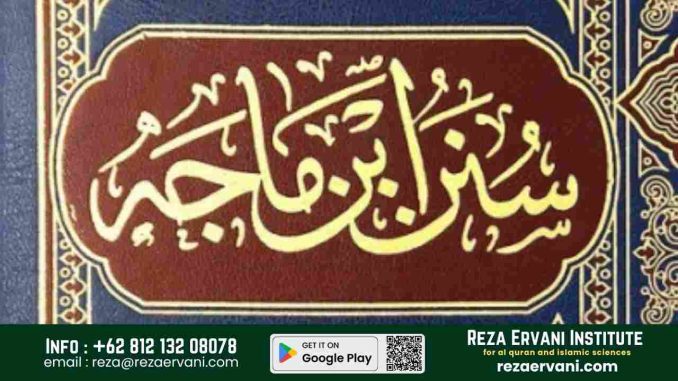
سنن ابن ماجة
Sunan Ibn Majah
Translated by: Reza Ervani bin Asmanu
This article “Sunan Ibn Majah” is included in the Science of Hadith Category
من هو الإمام ابن ماجه؟
Who is Imam Ibn Majah?
هو أبو عبد الله محمد بن يزيد بن ماجه الربعي بالولاء القزويني الحافظ الكبير المفسر، ولد سنة (209هـ) وتوفي سنة (273هـ)، قال أبو يعلى الخليلي الحافظ: ابن ماجه ثقة كبير متفق عليه، محتج به، له معرفة وحفظ.
He is Abu ‘Abdullah Muhammad bin Yazid bin Majah al-Rab’iy (by way of wala’) al-Qazwini, a great Hafizh (memorizer) and Mufasir (commentator). He was born in the year 209 AH and passed away in 273 AH. Abu Ya’la al-Khalili, the Hafizh, said: “Ibn Majah is an exceedingly trustworthy figure, whose excellence is agreed upon, used as an authority in evidence, and possesses profound knowledge and memorization.”
رتبة سنن ابن ماجه:
The Rank of Sunan Ibn Majah:
قال الصنعاني عن ابن ماجه: وكان أحد الأعلام، وألف السنن، وليست لها رتبة ما أُلّف مِنْ قَبْلِه، لأن فيها أحاديث ضعيفة بل منكرة، ونقل عن الحافظ المزي أن غالب ما تفرد به الضعيف.
al-Shan’aaniy said regarding Ibn Majah: “He was one of the prominent figures and the author of the Sunan, yet its rank is not equal to the works composed before it, because it contains weak (Da’if) or even denounced (Munkar) hadiths.” It was quoted from al-Hafizh al-Mizzi that the majority of what he narrated uniquely (tafarrud) is considered weak.
وقد اعتُبِر هذا الكتاب رابع السنن، ومتمم الكتب الستة التي هي المراجع الأصول للسنة النبوية، وكان المتقدمون يعدونها خمسة، ليس فيها كتاب ابن ماجه، ثم جعل بعضهم الموطأ سادسها، ولما رأى بعض الحفاظ كتابه كتابًا مفيدًا قوي النفع في الفقه ورأى من كثرة زوائده أدرجه في الأصول وجعلوه آخرها منزلة؛ وذلك لأنه تفرد بأحاديث عن رجال متهمين بالكذب.
This book is considered the fourth of the Sunan and the completion of the al-Kutub al-Sittah (The Six Major Books), which serve as the primary references for the Prophetic Sunnah. Earlier scholars counted them as only five books, excluding the work of Ibn Majah; later, some included the Muwaththa’ as the sixth. However, when certain Huffazh recognized his book as highly beneficial, particularly in the field of jurisprudence (fiqh), and noted its numerous unique additions (zawa’id), they included it among the fundamental sources, placing it at the final rank. This was primarily because it contains unique narrations from individuals accused of falsehood.
ومما تقدم نعلم أن إطلاق الصحيح على أحد كتب السنن الأربعة أو عليها مجتمعة مع الصحيحين فيه تساهل، لأن أحاديث الأربعة ليست كلها صحيحة، نعم أكثرها صحيح أو حسن، وربما كان ذلك سبب إطلاق الصحاح عليها من باب التغليب.
From the above, we understand that labeling any of the four Sunan books—or all of them together along with the ash-Shahiihain—as “Sahih” is a form of tasahul (leniency), as the hadiths within the four works are not all authentic. While it is true that the majority of their contents are Sahih or Hasan, this is likely why the term ash-Shihaah is applied to them as a generalizaion (taghliib).
عدد أحاديثه:
Number of Hadiths:
قال محقق الكتاب الأستاذ محمد فؤاد عبد الباقي: جملة أحاديث سنن ابن ماجه (4341) حديثـًا، من هذه الأحاديث (3002) حديثـًا أخرجها أصحاب الكتب الخمسة كلهم أو بعضهم، وباقي الأحاديث وعددها (1339) هي الزوائد على ما جاء في الكتب الخمسة، وهي كالتالي :
The researcher of the book, Professor Muhammad Fu’ad ‘Abdul Baqi, stated: “The total number of hadiths in Sunan Ibn Majah is (4,341). Of these, (3,002) hadiths were recorded by the authors of the other five major books, either entirely or partially. The remaining (1,339) hadiths are unique additions (zawa’id) over what is found in those five books, categorized as follows:”
1- أحاديث رجالها ثقات صحيحة الإسناد (428) حديثًا.
1. Hadiths whose narrators are trustworthy (Tsiqah) with authentic chains (Sahih): (428) hadiths.
2- أحاديث حسنة الإسناد (199) حديثـًا.
2. Hadiths with good chains (Hasan): (199) hadiths.
3- أحاديث ضعيفة الإسناد (613) حديثـًا.
3. Hadiths with weak chains (Da’if): (613) hadiths.
4- أحاديث واهية الإسناد أو منكرة أو مكذوبة (99) حديثـًا.
4. Hadiths with very flimsy (Waahiyah), denounced (Munkar), or fabricated chains: (99) hadiths.
من شروح سنن ابن ماجه:
Among the Commentaries (Sharh) of Sunan Ibn Majah:
(1) الديباجة بشرح سنن ابن ماجه، للشيخ كمال الدين محمد بن موسى الدميرى الشافعي المتوفى سنة (808هـ)، وجاء هذا الشرح في خمس مجلدات ، لكنه مات قبل تحريره.
(1) al-Dibajah bi Sharh Sunan Ibn Majah, by Asy-Syaikh Kamaluddin Muhammad bin Musa al-Damiri al-Shafi’i, who passed away in 808 AH. This commentary consists of five volumes, but he passed away before its final editing.
(2) مصباح الزجاجة على سنن ابن ماجه للحافظ جلال الدين السيوطي، المتوفى سنة (911هـ)، وقد شرح قطعة منه في خمس مجلدات.
(2) Misbah al-Zujajah ‘ala Sunan Ibn Majah by al-Hafizh Jalaluddin al-Suyuti, who passed away in 911 AH. He explained a portion of it in five volumes.
(3) ما تمس إليه الحاجة على سنن ابن ماجه، للعلامة ابن الملقن الشافعي، شرح فيه زوائد ابن ماجه على الكتب الخمسة، وقد ضبط فيه مشكله من الأسماء والكنى وما يحتاج إليه من الغرائب وجاء شرحه في ثمان مجلدات.
(3) Ma Tamassu ilayhi al-Hajah ‘ala Sunan Ibn Majah, by the scholar Ibn al-Mulaqqin al-Shafi’i. In this work, he commented on the unique additions (zawa’id) of Ibn Majah over the other five books, resolving complexities in names, agnomens (kunyah), and necessary rare vocabulary (ghara’ib). This commentary spans eight volumes.
(4) شرح سنن ابن ماجه للحافظ علاء الدين مغلطاى بن قليج بن عبد الله الحنفي التركي المصري المتوفى سنة (762هـ)، لكنه لم يتمه.
(4) Sharh Sunan Ibn Majah by al-Hafizh ‘Ala’uddin Mughaltay bin Qalij bin ‘Abdullah al-Hanafi, who passed away in 762 AH, though he did not complete it.
والله أعلم.
And Allah knows best.
Source: IslamWeb
Leave a Reply